The phrase 'home office' has always been a slight misnomer for a growing group of professionals. Consultants who bill from client sites. Strategists who work from three countries in a quarter. Founders who split time between a co-working space, a kitchen table, and an airport lounge. For these people, the challenge isn't designing a single great workspace. It's designing a working environment that travels.
The problem with fixed setups
The standard advice for home office design assumes permanence. Buy a good chair. Get a large monitor. Invest in a standing desk. This advice is sound for people who work from one place. It is largely useless for people who don't.
The consultant who works from hotel rooms four nights a week cannot bring their Herman Miller. The founder who bounces between Lagos, London, and Dubai cannot pack their external monitor. The result, for most mobile professionals, is a patchwork of compromised setups — a hotel desk with harsh overhead lighting, a café table with ambient noise they can't control, a co-working hot desk that looks different every Monday.
The performance cost of these environments is real. A 2022 survey by Leesman — specialists in workplace effectiveness — found that mobile workers reported significantly lower satisfaction with their work environment than those with fixed setups, despite often preferring the flexibility of movement. The gap was not in the work itself. It was in the environment.
What a portable setup actually requires
The goal is not to replicate your desk exactly in every location. It is to control the three variables that matter most — light, sound, and surface clarity — wherever you are.
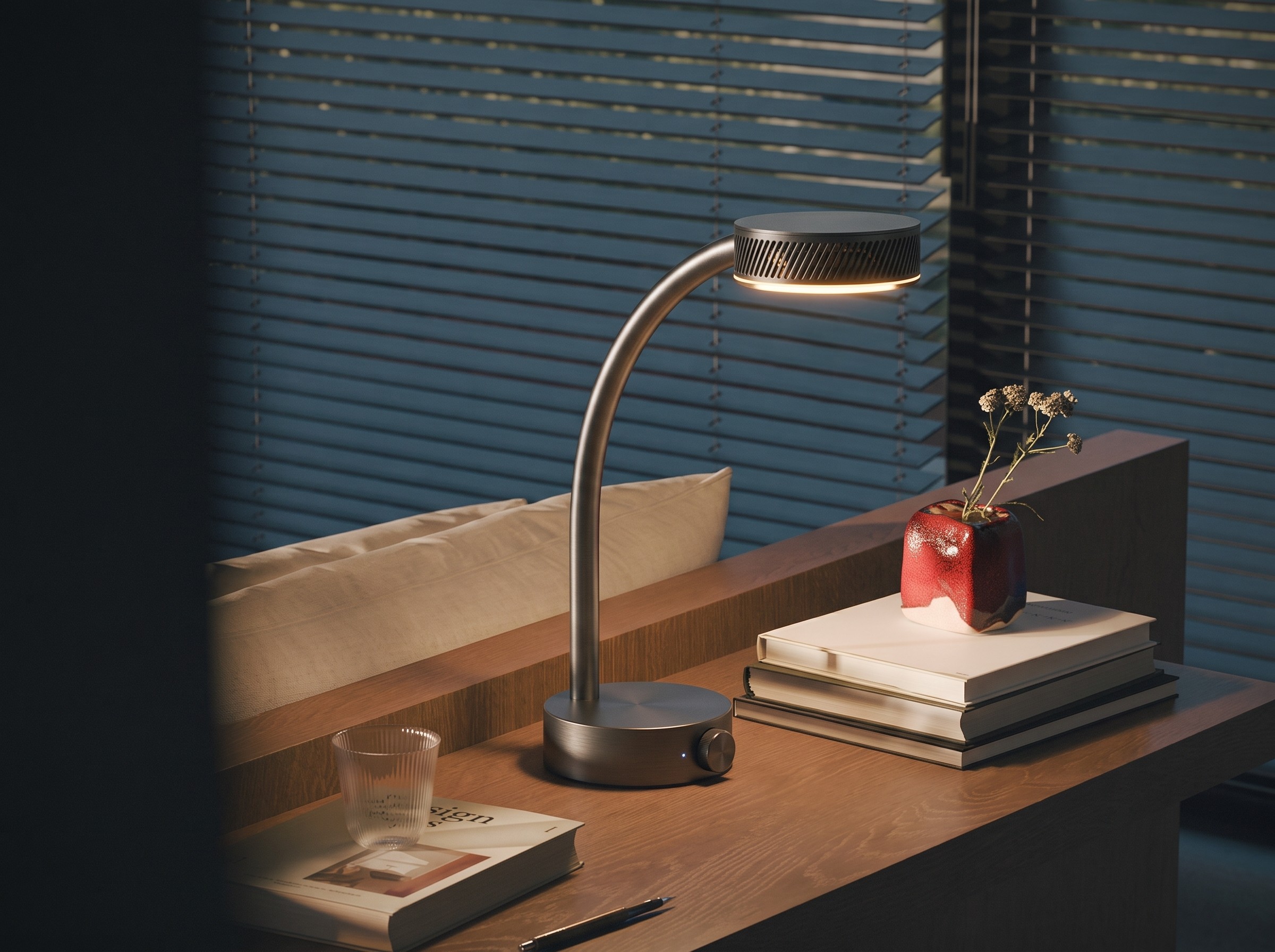
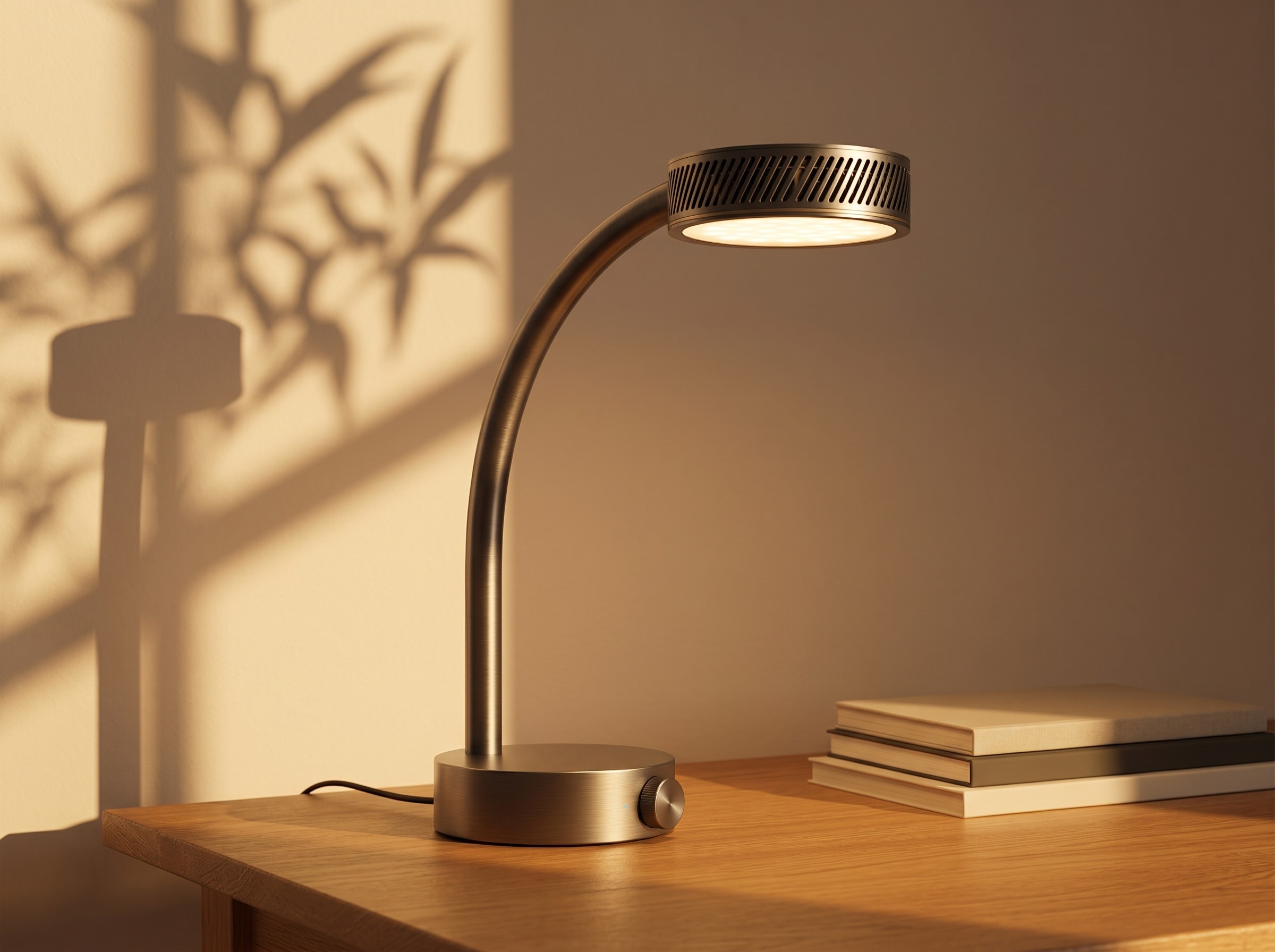
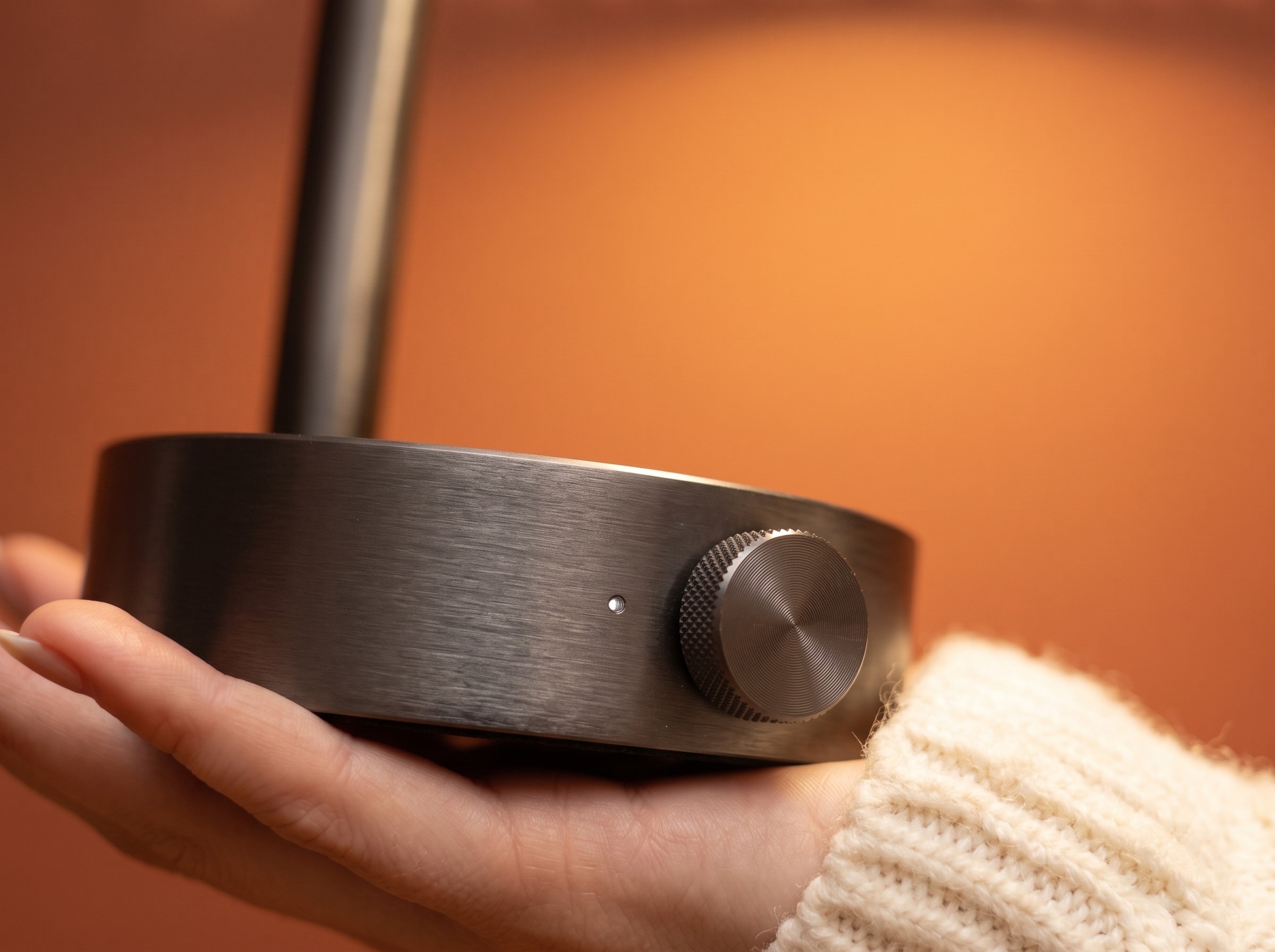
Light is the easiest to address. A compact, portable lamp with tunable colour temperature means you are no longer at the mercy of whatever the hotel or café has installed. Consistent, quality lighting dramatically changes how a space feels to work in, and how you appear on video calls.
Sound is second. A small, high-quality Bluetooth speaker handles both focus music and call audio better than laptop speakers in any environment. The key word is portable — it needs to be something you'll actually carry, which means weight and size matter as much as audio quality.
Surface clarity comes from habit rather than equipment. A portable setup that contains only what you need — laptop, lamp, speaker, one notebook — travels light and sets up fast. The discipline of not accumulating objects in transit is itself a skill.
The equipment standard to hold
The objects in your portable setup should meet a higher standard than their fixed equivalents, precisely because they are doing more work across more contexts. A lamp that is also a speaker is not a gimmick in this context — it is a direct reduction in what you need to carry and set up. A quality pair of headphones that handles both isolation and call audio removes the need for a separate microphone. A single power strip with USB-C ports means one cable to pack.
The professionals who work well in motion are not the ones who carry the most. They are the ones who have been ruthless about what earns a place in the bag.