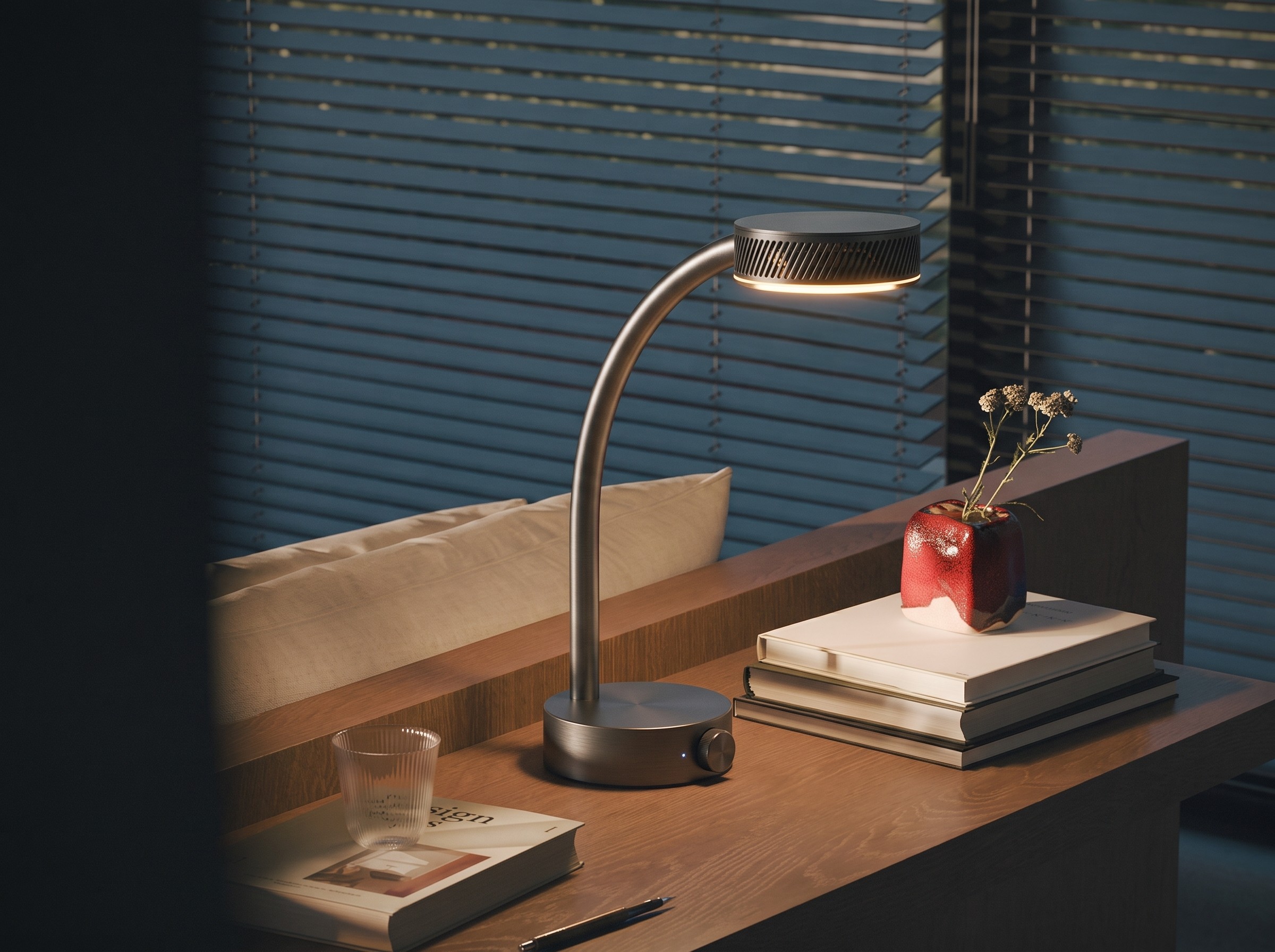
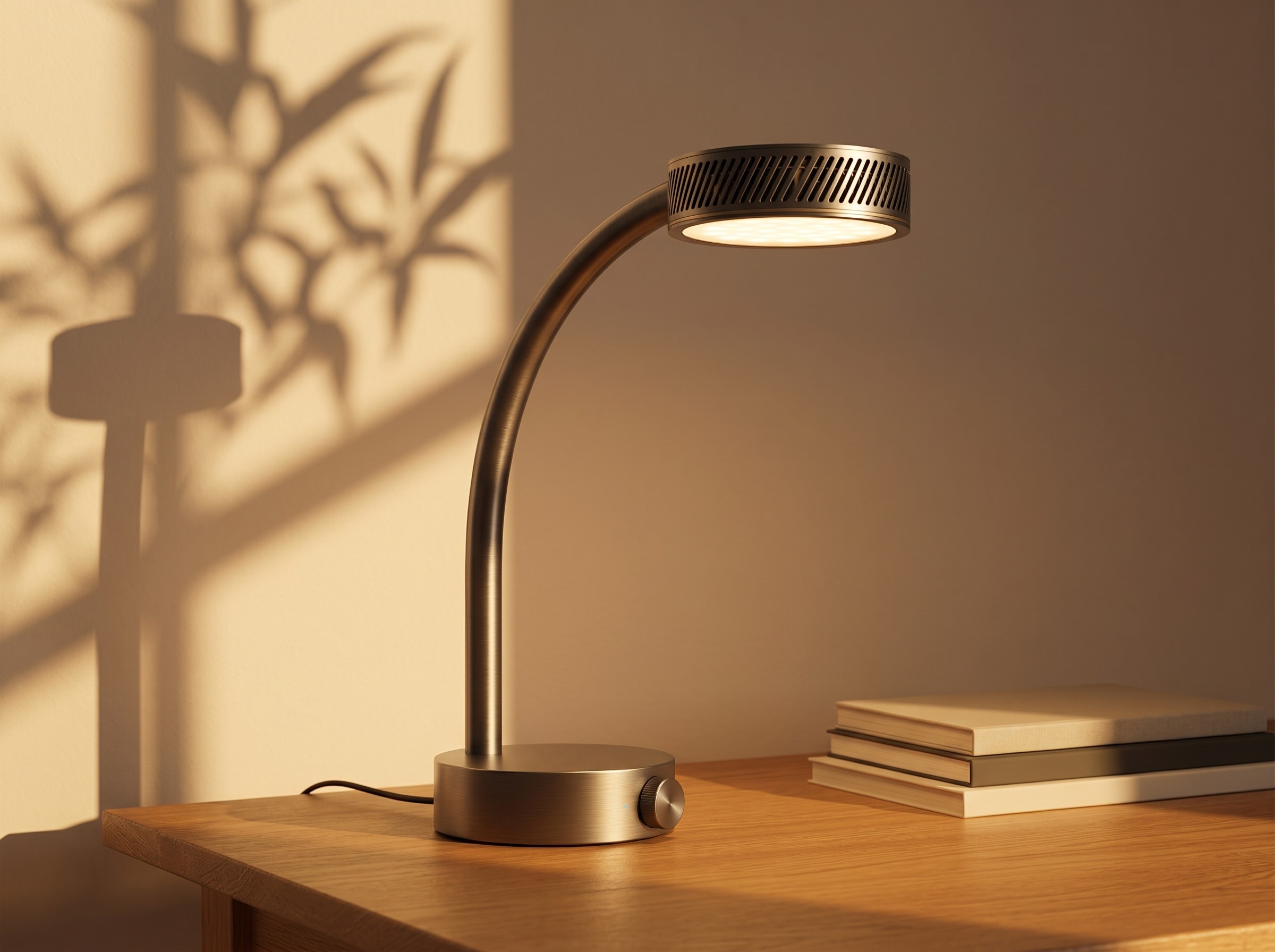
Most people treat desk lighting as a practical necessity — you need light to see, so you get a light. But light is not neutral. The specific characteristics of the light you work under have measurable effects on your biology and cognition, and understanding those effects gives you a meaningful lever to pull over your working day.
What colour temperature actually is
Colour temperature is measured in Kelvin (K) and describes the warmth or coolness of a light source. Low Kelvin values (2700K–3000K) produce warm, amber-toned light — the kind associated with incandescent bulbs, candlelight, and sunset. High Kelvin values (5000K–6500K) produce cool, blue-toned light — the kind associated with daylight, overcast skies, and fluorescent office lighting.
The difference between these is not just visual. It is biological.
What the research shows
The human circadian system is sensitive to blue light. Cool, high-Kelvin light suppresses the production of melatonin — the hormone that signals sleepiness — and activates the brain's alertness pathways through the suprachiasmatic nucleus. This is why exposure to cool light in the morning accelerates cognitive readiness, and why screen use before bed disrupts sleep.
A 2017 study published in the journal PLOS ONE found that workers under cool white light (6500K) performed significantly better on sustained attention tasks than those under warm light (2700K). A separate study from the Lighting Research Center found that cool light improved performance on tests requiring vigilance and working memory.
Warm light, by contrast, is associated with relaxation and reduced alertness. It is not inferior — it is appropriate for different contexts. Creative brainstorming, reflection, and wind-down tasks at the end of a working day benefit from the lower cognitive arousal that warm light produces. The problem is not warm light. It is using warm light when you need to be sharp.
The practical application
A fixed light source forces you to work against your biology at some point in the day. The practical solution is tunable lighting — a source that moves across the colour temperature spectrum and can be adjusted to match the cognitive demands of the task at hand.
A rough working framework: 5000K–6500K for analytical work, writing under deadline, deep focus sessions, and morning ramp-up. 3500K–4500K for collaborative work, meetings, and sustained but lower-intensity tasks. 2700K–3000K for creative ideation, reading, and end-of-day wind-down.
The light above your desk is one of the few environmental variables you can control precisely and change in seconds. Most people never adjust it at all.