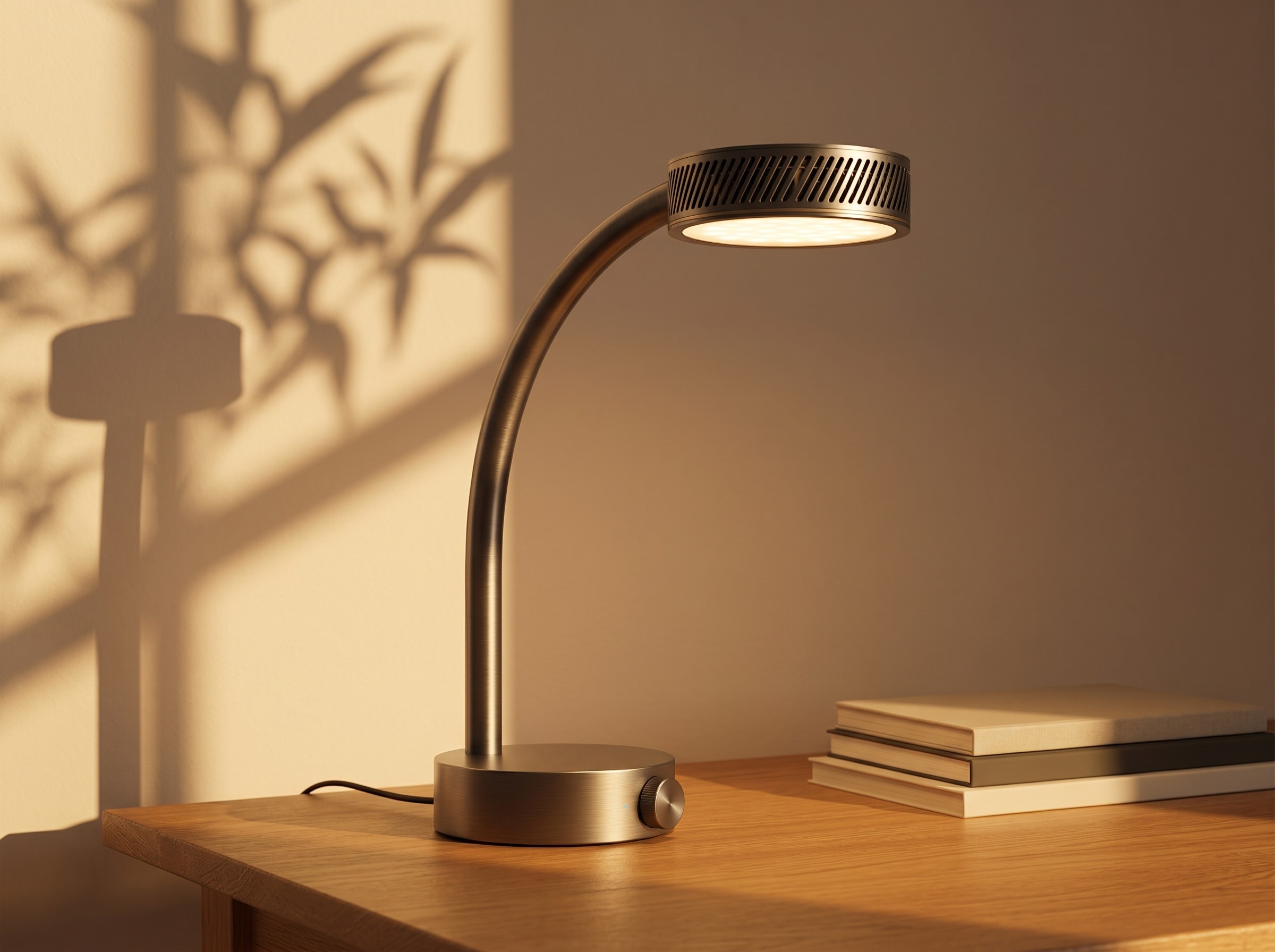
There is a well-documented relationship between physical environment and cognitive performance. Researchers call it environmental psychology — the study of how space shapes behaviour, attention, and mood. Most people have heard of it in abstract terms. Very few apply it to the place where they spend eight or more hours a day: their desk.
The average knowledge worker's desk is an afterthought. It accumulates objects rather than being intentionally designed. A monitor here, a cable there, a lamp picked up from a supermarket because the room was too dark. The result is a workspace that works against you in ways you never consciously notice — but your output registers every day.
The three desk variables that matter most
Lighting is the most underestimated. The colour temperature of your light source directly affects alertness and mood. Cool white light (5000K–6500K) activates the brain's alertness pathways — useful for analytical work, writing, and focus blocks. Warm amber light (2700K–3000K) signals rest, which is why reading under warm light in the evening feels natural. Most people work under a single fixed bulb and wonder why their energy crashes mid-afternoon. The fix is tunable light — something that shifts with your working day.
Sound environment is second. Open-plan offices and home setups with no acoustic control create constant low-level distraction. Studies from the University of Illinois found that even moderate ambient noise at unpredictable intervals significantly degrades performance on tasks requiring sustained attention. This is why noise-cancelling headphones became a productivity tool, not just a comfort purchase. What you listen to — and how it reaches you — shapes your ability to stay in a cognitive state.
Surface clarity is third. A cluttered desk is not just aesthetically displeasing. It is cognitively taxing. Every object in your peripheral vision competes for a fraction of your attention. Reducing visual complexity on your work surface is one of the fastest, cheapest productivity interventions available. The research on this goes back to the early 2000s and has only been reinforced since.
What this means practically
You do not need to redesign your entire office. You need to audit your desk with the question: does this object earn its place? If it doesn't serve a clear function or improve how you work, it's costing you something — even if you can't see the invoice.
The professionals who tend to perform consistently at high levels share one quiet habit: they are deliberate about where they work, not just how. The desk is not a surface for accumulation. It is an environment you design.