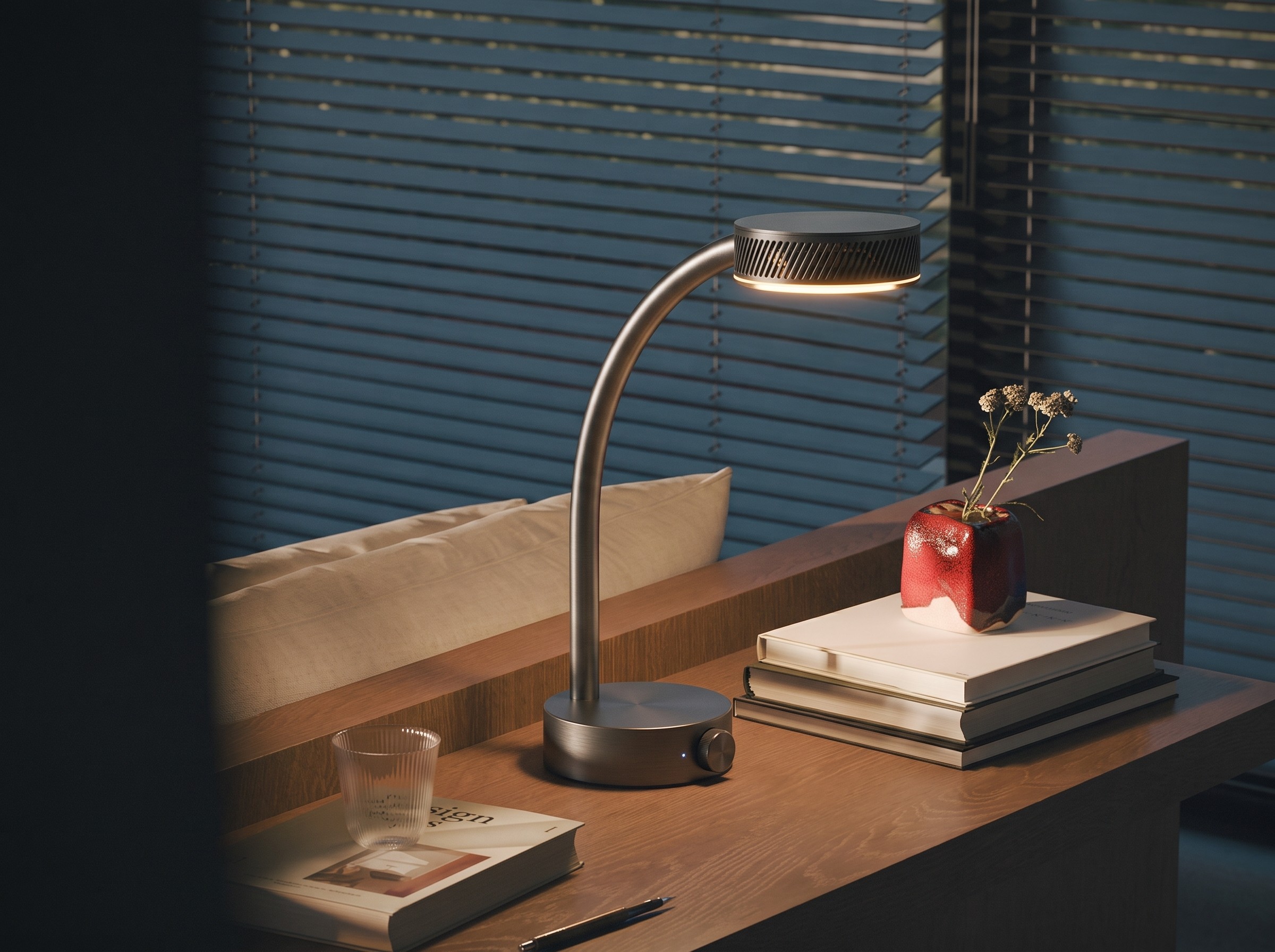
There's a version of minimalism that is purely aesthetic — white surfaces, nothing on them, photographed for Instagram and completely impractical to work in. That's not what this is about.
This is about something more functional: the idea that the number of objects on your desk has a direct relationship to the quality of your thinking. And that the most useful objects are the ones that consolidate function rather than add to the object count.
Why object count matters
Every object on your desk occupies three things: physical space, visual attention, and a small portion of cognitive load. The physical space argument is obvious — a crowded desk limits how you work. The visual attention argument is subtler. Studies in environmental psychology show that peripheral visual complexity consistently degrades performance on tasks requiring focus. Your brain is not ignoring the clutter. It is actively suppressing it, and that suppression costs processing capacity.
The cognitive load argument is the most interesting. Objects create micro-decisions. Should I move this? Where does this belong? When did I last use this? These questions surface at low volume but persistently. Over a working day, they add up to a cumulative drain that feels like fatigue but is actually decision overload.
The consolidation principle
The most effective response is not to remove everything — it is to consolidate. Identify the objects on your desk that perform a single function and ask whether a different object could perform multiple functions better.
A lamp that is also a speaker is one object, one cord, one decision, and two fewer items you need to source, position, and maintain separately. A monitor arm that also manages your cables eliminates the nest of wires that most desks accumulate. A notebook that doubles as a calendar removes the need for a second physical document system.
This is not about brand or budget. It is about asking the consolidation question before you add anything to your desk: what is already here that this could replace?
The objects that earn their place
A useful test is what industrial designers call the replacement question. If this object broke today, would you replace it immediately? If the answer is yes, it earns its place. If you'd pause — or feel relieved — it probably shouldn't be there.
Apply that test to every object on your desk. You may find you're maintaining a surface full of things you're replacing out of habit rather than need. The desk that performs best is not the one with the most on it. It's the one where every object was chosen on purpose.